The long-term goal of the Richardson lab is to contribute to a deeper understanding of the 3D structures of proteins, including their description, determinants, folding, evolution, and control. This has now been broadened to include RNA structures. Our approaches include structural bioinformatics, macromolecular crystallography, molecular graphics, analysis of structures, and methods development, currently focussed on the improvement of structural accuracy.
Following on two of the earliest protein crystallographic structures (Staphylococcal nuclease and Cu,ZN superoxide dismutase), our continuing analysis and comparison of protein structures then led to an early classification system, new overall folds (such as the Greek key beta barrel, and what is now called the SS beta cross), and description of many new small-scale features (such as right-handed crossovers, beta bulges, helix N-caps and C-caps, and cisPro touch-turns). We now also analyze structural motifs in RNA, including an all-angle definition of conformers for RNA backbone.
We develop methods for representing protein structure, most notably the hand drawings that popularized ribbon schematics and formed the basis for the present computer ribbon drawings. We develop software to fill what we see as unmet needs, most notably kinemages (molecular graphics optimized for the communication of specific ideas in 3D) and the associated Mage and KiNG display programs, free software on Mac, PC, and Linux, widely used for teaching and databases as well as for research. Mage and KiNG incorporate many functions for analyzing and rebuilding macromolecules, including the "Backrub" tool for making realistic local movements in protein backbone.
We were among the first groups to do protein de novo design and made designs in all 4 of the major tertiary-structure types, using complex, native-like sequences (e. g., betabellin, Felix, babarellin, and SScorin). We introduced the concept of negative design, and we first pointed out the general problem of the more-or-less molten nature of most fully de novo designs. In order to treat internal packing in quantitative detail, we developed an all-atom contact algorithm to quantify and visualize the geometric details of molecular interaction; it uses all explicit H atoms and a very small probe sphere to show those surface patches where atoms are within 0.5 Å of exact van der Waals contact. This method gives a sensitive description of packing quality within or between molecules, for use in protein or drug design, for understanding structural features and interactions, and for designing non-disruptive mutations. All-atom contact analysis, along with crystallographic B-factors, allowed us to construct much-improved libraries and data distributions for protein sidechain rotamers and Ramachandran phi,psi backbone angles. All of these validation analyses can be run interactively on the MolProbity web service, including optimized hydrogen addition and automated correction of "flipped" sidechain amide or histidine orientations.
All-atom steric clashes are a powerful and sensitive way of finding problems in molecular structures, and even of suggesting how to make corrections. As part of the SECSG structural genomics effort, we used MolProbity diagnosis along with rebuilding and refinement on 29 SECSG structures, producing modest improvements in traditional crystallographic measures (R, Rfree, geometry, real-space residual) and dramatic order-of-magnitude improvements in all-atom clashscore and rotamer and Ramachandran outliers. We are now working to extend applicability to RNA and to NMR structures, and, as part of the PHENIX software team, to further integrate and automate these techniques in crystallography. A long-term vision is to enable the determination of accurate models even from low-resolution data.
For more details, see our kinemage web site at kinemage.biochem.duke.edu, where all our software is available free and open-source, as well as datasets and examples. There is a service called MolProbity where you can run our structure validation tools on an uploaded file of your own or one chosen from the PDB or NDB, and display the results directly on-line in KiNG.
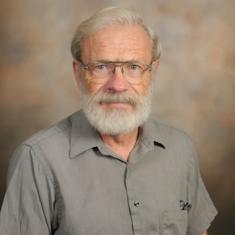


Recent Past Lab Members |
||||
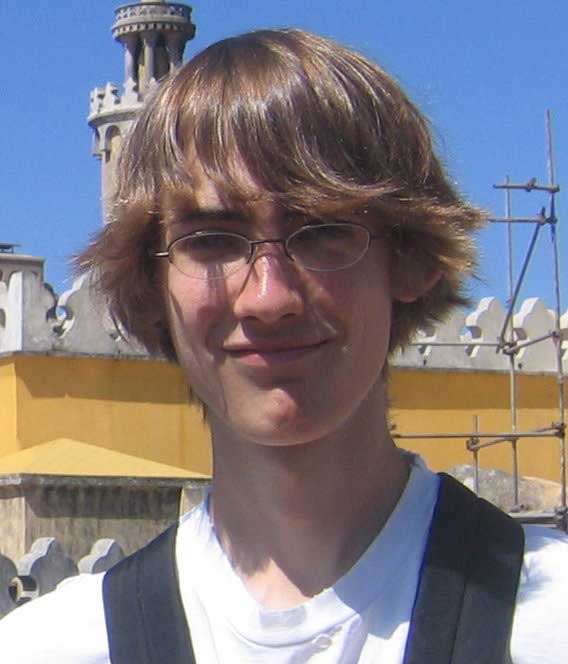
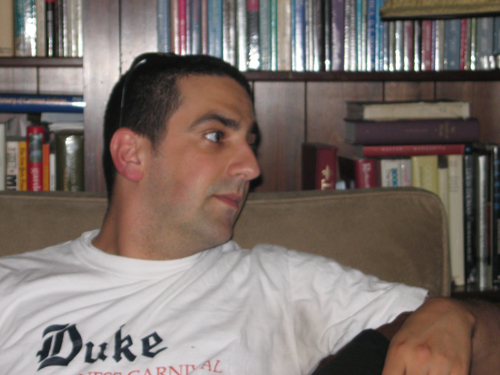
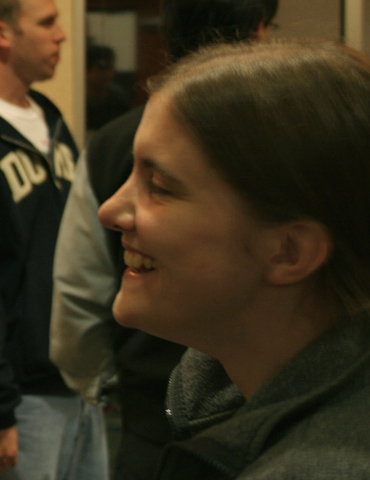
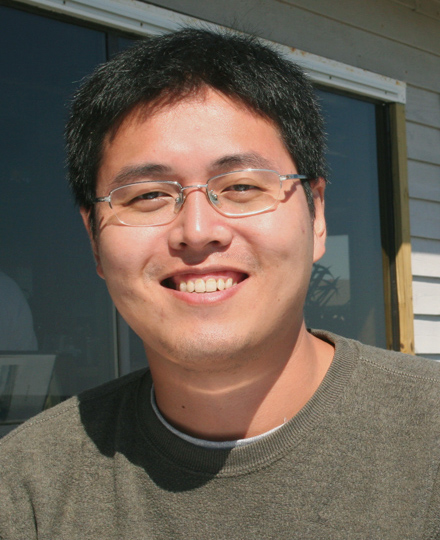
| Name | Currently | Looked Like |
||
|---|---|---|---|---|
| Lizbeth Videau | retired |

|
videau AT biochem.duke.edu | |
| Bradley Hintze | Precision Oncology Analyst, VA Research, Durham |

|
bradley AT hintze.org | |
| Steven Lewis | Cyrus Biotech |

|
smlewi AT gmail.com | |
| Swati Jain | pDoc with Tamar Schlick, Chem Dept, NYU |

|
jainswati29 AT gmail.com | |
| Bryan Arendall | Senior Research Associate (retired) |

|
wbarendall AT gmail.com | |
| Gary Kapral | PhD Posters |

|
gary.kapral AT gmail.com | |
| Jeff Headd | Translational Informatics, Johnson&Johnson |

|
jheadd AT gmail.com | |
| Jo Anna Wiersma Capp | RLab & Oas Lab, now pDoc w David Fushman UMD |

|
jcapp AT umd.edu | |
| Lindsay Deis | RLab & Oas Lab, now pDoc w Peter Kim |

|
deisl AT stanford.edu | |
| Daniel Keedy | Assistant Professor, ASRC,CUNY, NY NY |

|
daniel.keedy AT gmail.com | |
| Jeremy Block | Baruch College, NYC |

|
jeremy.block AT gmail.com | |
| Laura Murray | Land of Green Ginger |

|
gaultheria AT gmail.com | |
| Ian Davis | Bioinformatics Lead, Monsanto St. Louis |

|
ian.w.davis AT gmail.com | |
| Xueyi Wang | Assistant Professor NW Nazarene U, Nampa,ID |

|
xwang AT nnu dot edu | |
| Bob Immormino | Research Associate UNC-Chapel Hill |

|
immormino AT gmail.com | |
| Thom LaBean | Associate Professor Materials Science & Engineering, NC State |

|
thlabean AT ncsu.edu | |
| Simon Lovell | Faculty of Life Sciences Univ of Manchester, UK |

|
simon.lovell AT man.ac.uk | |
| Michael Word | Open Eye Software (retired) Santa Fe, NM |

|
word27605 AT gmail.com | |